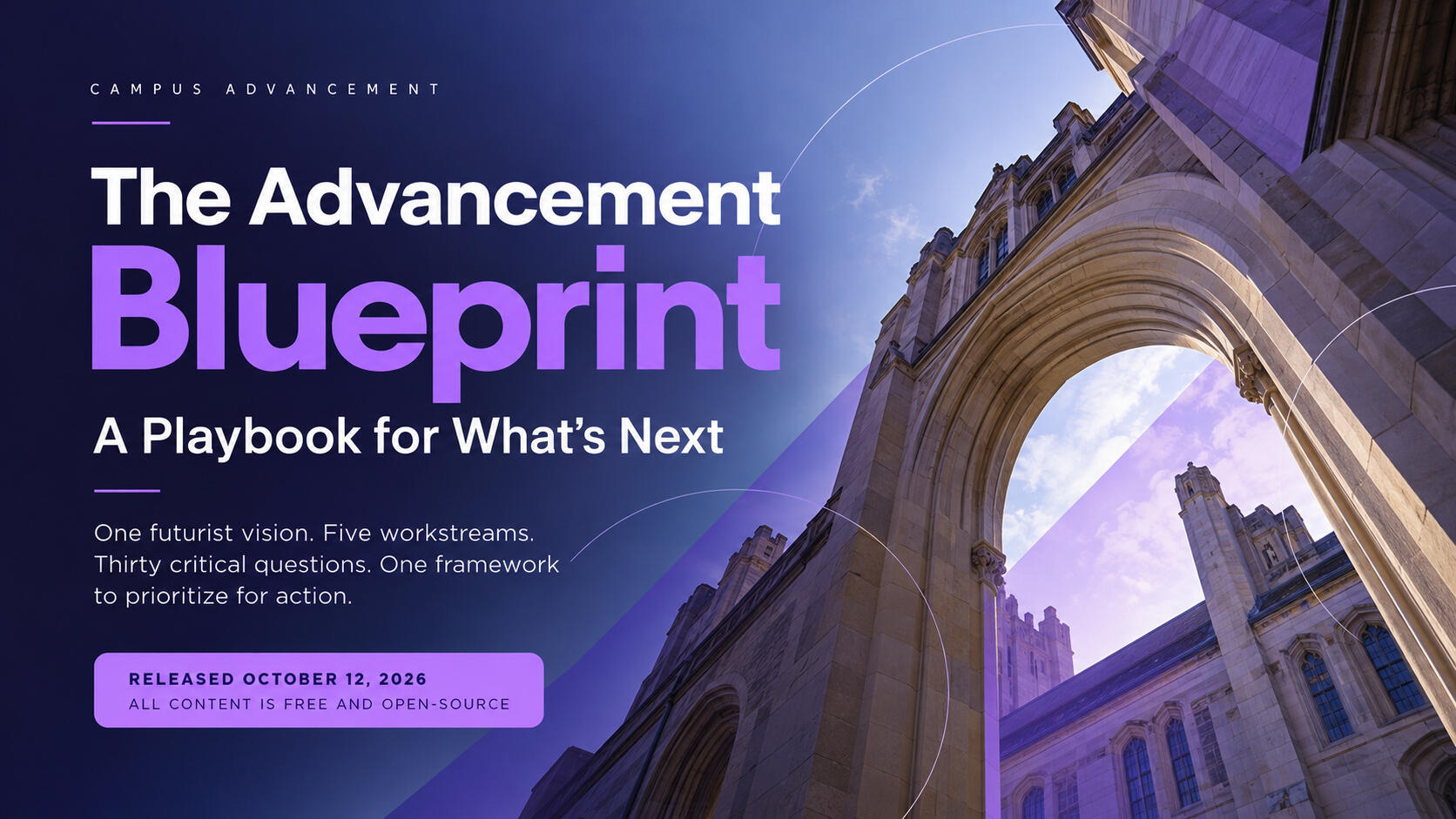
The Future of Advancement Demands More Than Business as Usual
Advancement has never had more tools, knowledge, or potential to shape the future of higher education. Yet the pressures facing our institutions—and our profession—are growing.AI is changing how work gets done. Donor expectations are evolving. Persistent turnover strains teams. And as colleges and universities confront difficult financial and strategic decisions, advancement must demonstrate its value in ways that extend well beyond dollars raised.The opportunity isn't simply to do more of what we've always done. It's to rethink how we operate, where we invest, how we develop talent, and what it means to be a truly indispensable partner to institutional mission.That's the challenge behind The Advancement Blueprint.
A Different Kind of Conversation
In August 2026, Campus Advancement brought chief advancement officers from across the country together in Saint Paul, Minnesota, for our inaugural Executive Futurist Retreat.The purpose was intentional: create meaningful time away from the demands of daily work to reflect, challenge assumptions, exchange perspectives, and imagine what the advancement profession could become.Those conversations helped shape The Advancement Blueprint—not as a collection of predictions or a finished set of answers, but as a shared starting point for asking better questions and building what comes next.
Five Workstreams. Thirty Critical Questions.
What should advancement look like in the years ahead? What must change, what deserves greater investment, and which long-standing practices should we be willing to reconsider?The Blueprint organizes these challenges into five interconnected workstreams.
1. Define the Advancement Umbrella of the Future
What belongs in a high-performing advancement organization? Reconsider the functions we maintain, the resources we commit, and where we can create the greatest institutional value.
2. Incorporate Measurements of Institutional Impact
Dollars raised matter. But they don't tell the whole story. Explore how advancement can better demonstrate its contribution to institutional priorities, financial sustainability, and long-term impact.
3. Build a New Advancement Operating Model
AI offers extraordinary possibilities, but technology alone won't transform our organizations. Rethink how advancement teams are structured, how work gets done, and where human expertise creates the most value.
4. Identify, Develop, and Retain Exceptional Frontline Talent
Great advancement organizations depend on exceptional people. What needs to change in how we recruit, develop, reward, and retain them—and how do we finally address the turnover that holds our profession back?
5. Build the Fluency Required for Strategic Leadership
Advancement leaders need more than fundraising expertise. Explore the institutional, financial, strategic, and technological fluency required to become indispensable partners in shaping the future of higher education.
The Questions Are Ours. So Is the Opportunity.
The Advancement Blueprint is a starting point, not a finished set of answers.Its 30 questions and companion Workbook are designed to help advancement leaders identify priorities, challenge assumptions, and turn ideas into action. Bring it to your team. Discuss it with your president. Build on it, test new approaches, and share what you learn.The future of advancement is ours to shape.
© 2026 Campus Advancement®. All rights reserved.